The Real Cost of Ignoring a Dead Tree
A dead tree in your yard can feel like low priority — it's not going anywhere, it's not actively causing problems, and tree removal costs money. So it sits. Then it keeps sitting. What most homeowners don't realize is that the longer a dead tree stands, the more expensive — and dangerous — the situation becomes. Here's the real cost of waiting.
Structural Integrity Deteriorates Fast
The moment a tree dies, it starts to lose structural strength. Wood-decaying fungi move in quickly, hollowing out the trunk and root system from the inside. What looks like a solid tree from the outside may have a core that's largely gone within a year or two of the tree dying. The outer shell can hold its shape for surprisingly long, giving false reassurance — until the tree falls.
In Florida's climate, this process accelerates. Our humidity, heat, and frequent rain create ideal conditions for fungal decay, and the same insects that are kept at bay by a healthy tree's natural defenses move in rapidly once it dies. Termites and carpenter ants are common colonizers of standing dead trees, and they don't stay contained.
Property Damage and Insurance
If a dead tree falls on a structure — your home, your fence, your vehicle — the damage can be significant. What's less obvious is how insurance companies often treat these situations. If an adjuster determines that the tree was visibly dead or diseased prior to falling, your insurer may reduce or deny coverage on the grounds of negligence. "You knew it was dead" is a difficult position to argue from.
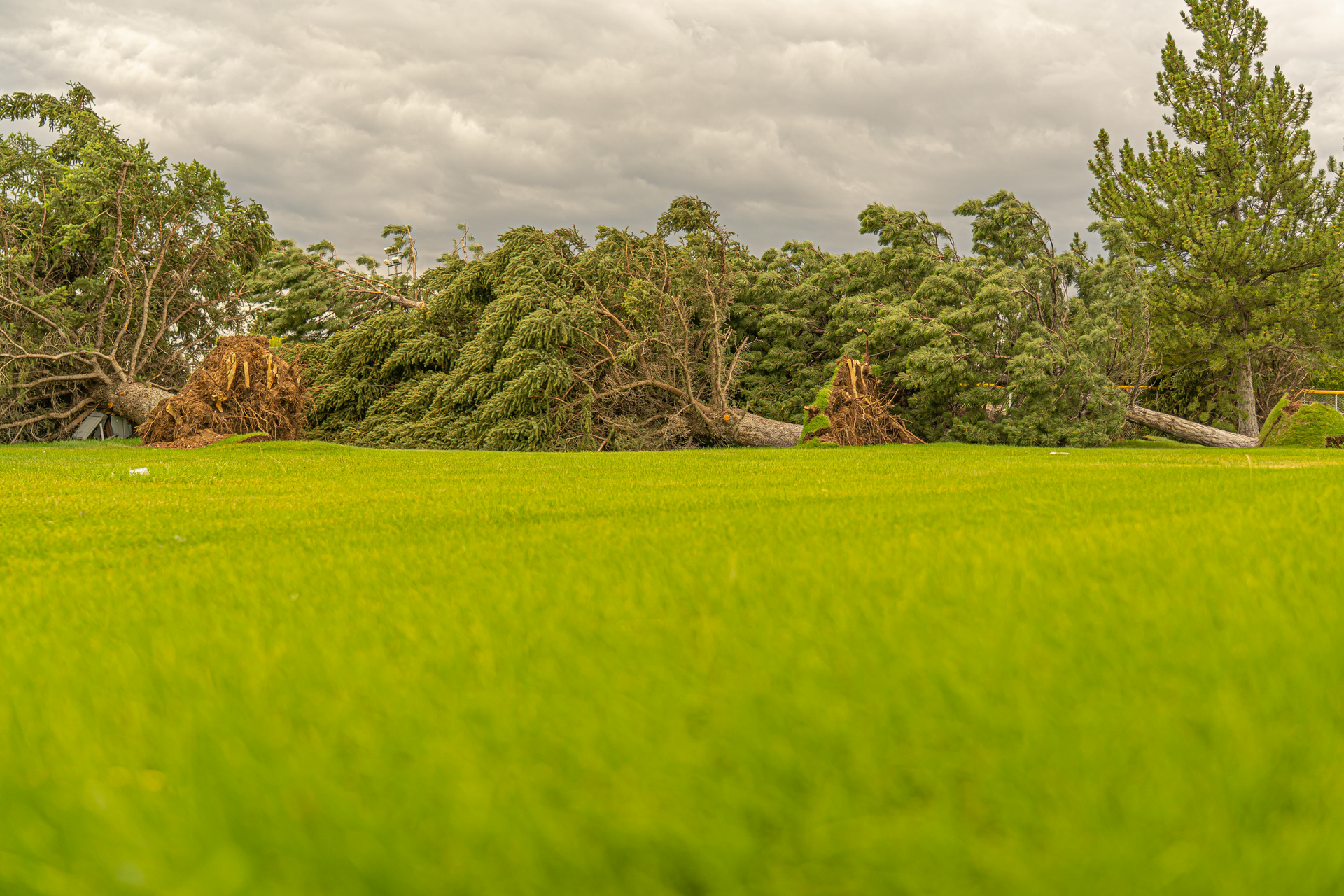
Emergency tree removal — after the tree has already fallen or partially failed — costs significantly more than proactive removal. Emergency crews charge premium rates, the job is more dangerous and complex (removing a tree that's already on something), and you're also dealing with whatever structure the tree damaged. The cost of a scheduled, proactive removal is almost always a fraction of the emergency alternative.
Liability for Dead Trees Near Property Lines
Florida homeowners have a legal duty to address known hazards on their property. If a dead tree on your land falls onto a neighbor's home, vehicle, or worse — and it can be established that you were aware of the hazard and didn't act — you may be held liable for the damages. This isn't a hypothetical; it's a scenario that plays out regularly, especially after major storms move through neighborhoods in Orlando, Sanford, and surrounding areas.
The Cost Comparison
- Scheduled removal of a standing dead tree: typically lower cost, done on your timeline
- Emergency removal after partial or full failure: significantly higher due to complexity and urgency
- Damage repair to structures: roofing, fencing, vehicles, and landscaping add substantial additional cost
- Legal liability if the tree damages a neighbor's property: potentially unlimited
- Insurance complications: possible coverage reduction or denial for known, unaddressed hazards
The math isn't complicated. Removing a dead tree now costs less in every scenario than removing it after it falls. Fricke's Tree Service handles dead tree removal across the Orlando metro — efficiently, safely, and at honest prices. Call us at (321) 240-5613 or schedule your free estimate today.
SHARE POST
RECENT POSTS
Interested in Our Services?
Get in touch today to discuss your next project and we will happy to answer any questions and provide you with a no-obligation FREE Estimate.
