Palm Tree Trimming: Dos and Don'ts
Palms are one of the defining features of Florida's landscape, and they're everywhere — in front yards, along driveways, lining commercial properties, and framing backyards across Central Florida. But despite how common they are, palm trimming is one of the most frequently mishandled tree maintenance tasks in the state. Here's what you need to know to keep your palms healthy, safe, and looking their best.
The Biggest Mistake: Over-Trimming
The most damaging thing you can do to a palm is remove too many fronds at once. This practice is so common in Florida that it has a name: "hurricane cutting." Homeowners and inexperienced crews strip palms down to just a few fronds at the top, believing it reduces wind resistance before storms. It doesn't — and it causes significant harm.
Palms get their nutrition from their fronds. Remove too many at once, and you starve the tree. A heavily over-trimmed palm diverts energy away from growth and into recovery, which weakens the trunk, slows root development, and makes the tree less hurricane-resistant over time, not more. The "hurricane cut" look might seem tidy, but it's actively damaging the tree every season it's repeated.
Green fronds should almost never be removed. Even fronds that are partially yellowing may still be photosynthesizing and contributing to the tree's health. The general rule: only remove fronds that are fully brown, dry, and drooping below the horizontal.
What Proper Palm Trimming Looks Like
A properly trimmed palm should have a full, round canopy with a natural crown. The goal is to remove dead and dying material, not to sculpt the shape of the tree. Remove only fronds that hang below a 90-degree horizontal angle — the "9 o'clock to 3 o'clock" rule is a helpful mental guide. Flower stalks and fruit clusters can also be removed if desired, as they divert energy from growth.
The frequency depends on the species and location. Most palms in residential settings need trimming once a year — more often in high-visibility commercial settings, less often if the palm is in a low-maintenance area. Avoid trimming palms during summer months when the Fusarium fungus, which causes lethal palm decline, is most active and can be introduced through trimming wounds.
Palm Trimming Dos and Don'ts
- Do: Remove only fully brown, drooping fronds
- Do: Clean tools between palms to avoid spreading fungal disease
- Do: Remove flower stalks and seed pods to redirect the tree's energy
- Don't: Remove green fronds — even slightly yellow ones may still be productive
- Don't: Hurricane cut — stripping the canopy creates long-term structural weakness
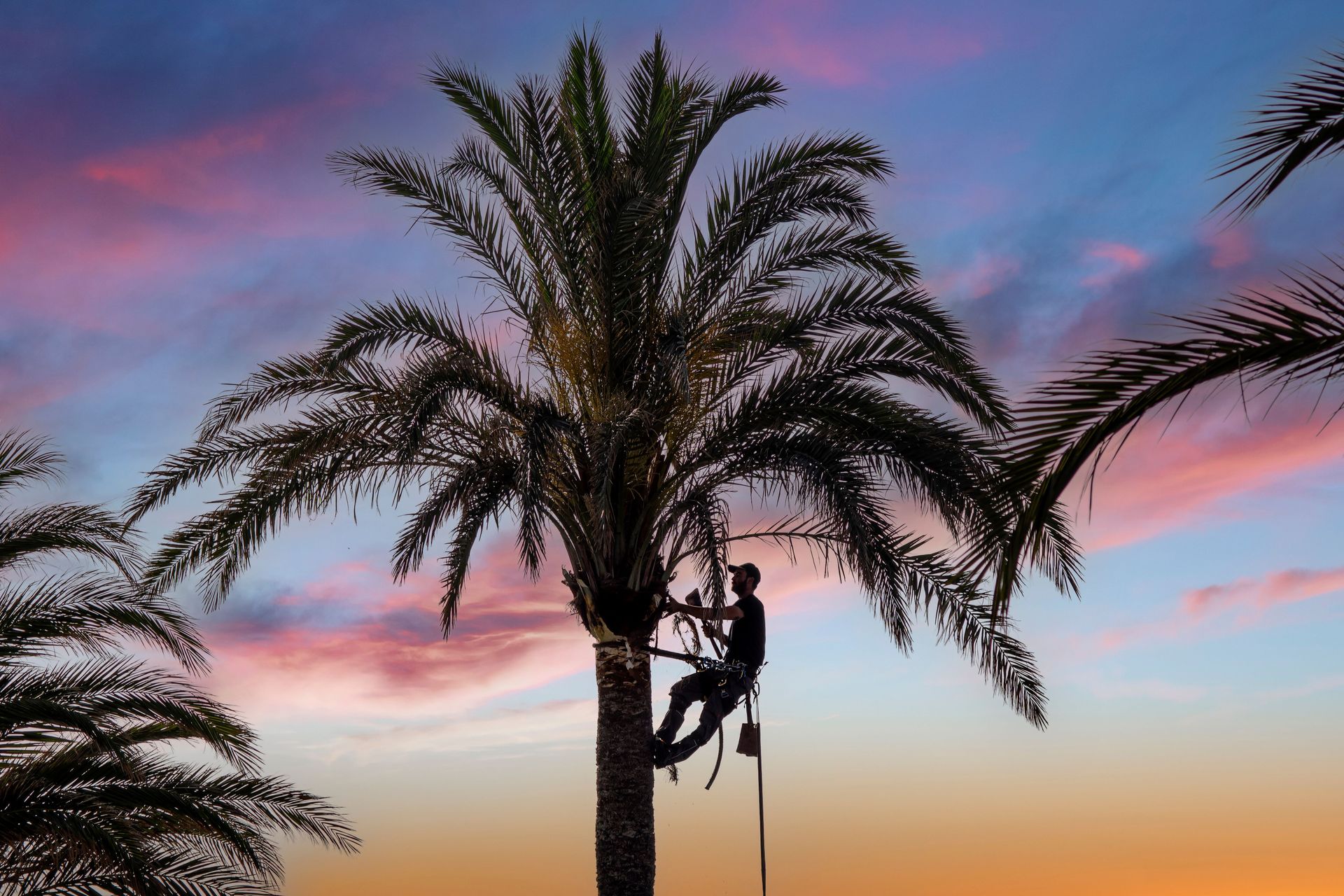
- Don't: Use climbing spikes on palms — they create wounds that invite disease
Fricke's Tree Service handles palm trimming for residential and commercial properties throughout Orlando, Oviedo, DeLand, Deltona, and surrounding areas. If your palms need attention before or after storm season, we're ready to help. Call (321) 240-5613 or request a free estimate.
SHARE POST
RECENT POSTS
Interested in Our Services?
Get in touch today to discuss your next project and we will happy to answer any questions and provide you with a no-obligation FREE Estimate.
